
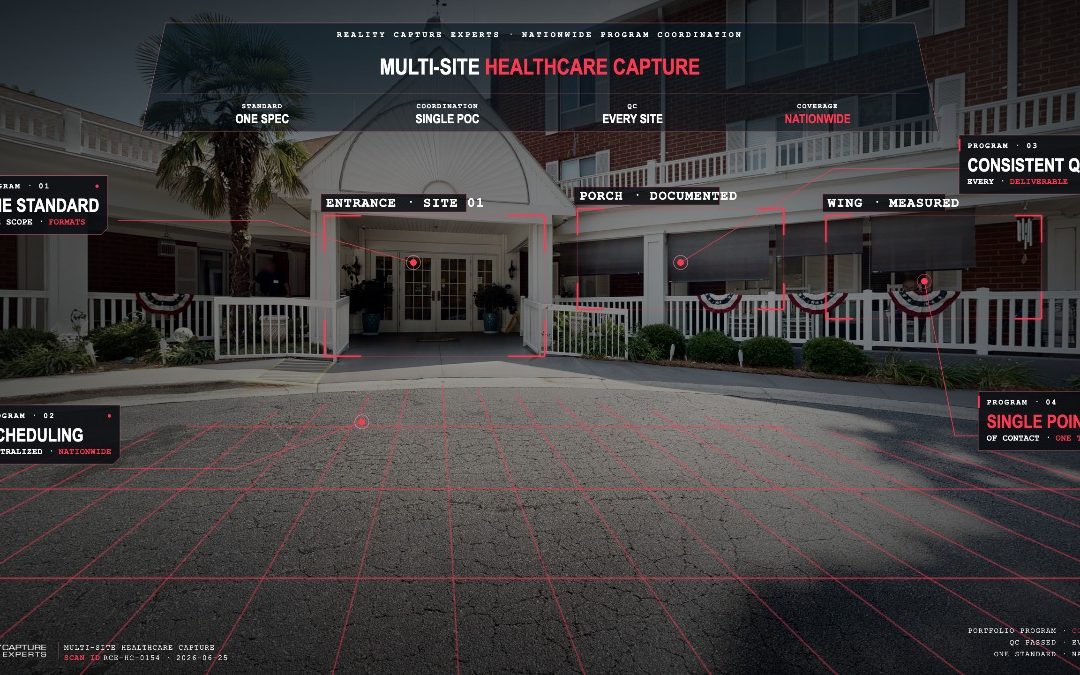
Multi-site healthcare capture works best run as one program – one scope standard, one QC process, and one point of contact – instead of letting each facility arrange its own scanning across a multi-hospital system. That single managed program is what makes documentation consistent and comparable across every building in the system.
Why doesn’t site-by-site scanning work at scale?
Site-by-site scanning doesn’t work at scale because it produces documentation that doesn’t match from one building to the next. Every site solving the problem on its own is the cause of the inconsistency, not the cure.
When each facility hires its own local vendor, you get different formats, different standards, different naming, and different levels of accuracy. The system ends up with a pile of one-off files that are hard to compare, hard to maintain, and expensive to keep current. That is the do-it-yourself model: every location managing its own scanning, its own operators, and its own vendors, site by site.
What does a multi-site healthcare capture program look like?
A managed multi-site healthcare capture program puts one team in charge of documenting every facility to the same standard, nationwide, under a single point of contact.
The structure is straightforward. One scope standard defines what gets captured and to what level of development. One QC process checks every deliverable before it is handed back. One point of contact coordinates scheduling, access, and reporting across every market. RCE deploys trained on-site operators wherever the buildings are and captures with Matterport and LiDAR – the Matterport platform paired with survey-grade laser scanning – so a deliverable from one campus looks and behaves like a deliverable from another.
How do you handle facilities in many different markets?
You handle geographic spread with a national operator network and centralized coordination, so multi-site healthcare capture is not limited by where one regional crew happens to be.
This matters because health-system projects and lease events do not wait. When a renovation kicks off in one state and a documentation refresh is due in another, a centralized program deploys to both on the system’s timeline. The facility teams are not each chasing local availability – one point of contact manages coverage across the portfolio.
How does multi-site healthcare capture stay current over time?
Multi-site healthcare capture stays current by capturing on a cadence the system sets and refreshing documentation after projects, rather than treating capture as a one-time event.
This is the difference between buying scans and running a program. Scans are files that start aging the day they are delivered. A program keeps the record aligned with the building – new capture after renovations, scheduled refreshes across the portfolio – so the documentation behind compliance and renovation planning stays reliable. It is the operating model behind a system-wide as-built documentation program.
What happens next / How RCE handles multi-site healthcare capture
Standing up a system-wide multi-site healthcare capture program starts with the portfolio: how many sites, where, what documentation exists, and which buildings have projects coming. RCE proposes a capture sequence, a scope and QC standard, and a single point of contact to coordinate nationwide. We capture building by building until coverage is complete, then keep it current on your cadence. The system gets one reliable record – not dozens of mismatched ones.
Frequently asked questions
We already have scans from different vendors. Can you bring them into one program?
RCE standardizes future capture to one scope and QC across the portfolio, and scopes how to bring existing documentation into a consistent program. The goal is one reliable record going forward. RCE can accept Matterport model transfers from your previous vendor.
How do you cover facilities in many states?
Through a national operator network and centralized coordination. One point of contact manages capture across every market on your timeline.
Is a managed program more expensive than local vendors?
A managed program is scoped to your portfolio. The value is consistency and reliability – comparable documentation across every site, and less time spent reconciling mismatched files. Pricing is scoped per engagement; we don’t quote scope or price here.
Who do we work with day to day?
A dedicated single point of contact, with full RCE team support, who coordinates scoping, scheduling, access, and reporting across the whole system.